
Posted by Dever Yang on 13th Aug 2026
Why Blade Direction Matters: A Critical Safety Tip for Leather Belt Stropping
When using a leather stropping belt for final edge finishing, deburring, or polishing, belt direction is not just about achieving a better finish—it is an important safety consideration.
A common mistake is presenting the cutting edge directly into the direction of belt travel. When this happens, a sharp blade can bite into or cut the leather belt instead of gliding smoothly across its surface. This can damage the belt, affect the quality of the finished edge, and potentially create a serious safety hazard for the operator.
The Key Principle: Always Use an Edge-Trailing Direction
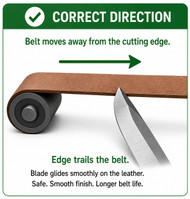
During leather belt stropping, the cutting edge should trail with the belt movement rather than face into it.
In simple terms:
CORRECT: The belt moves away from the cutting edge, allowing the blade to glide smoothly over the leather.
INCORRECT: The belt moves into the cutting edge, allowing the blade to dig into or cut the leather.
Leather stropping is designed to refine, polish, and remove the final burr from an edge—not to grind aggressively into it.
When the blade is positioned correctly, the moving leather gently passes beneath the edge, helping produce a smooth and consistent finish.
When the direction is reversed, however, the sharp edge can act like a cutting tool against the leather. It may suddenly bite into the belt, causing cuts, tearing, belt damage, or unexpected movement of the workpiece.
A Simple Safety Check Before You Start
Before switching on your machine, always check:
Is the belt moving away from the cutting edge, or is the cutting edge facing directly into the moving belt?
If the edge is facing into the belt movement, stop and reposition the blade before continuing.
Where practical and permitted by the machine manufacturer, verify the belt direction with the machine safely switched off before operation.
Better Technique. Better Finish. Safer Operation.
Correct leather belt stropping technique can help:
- Reduce the risk of cutting or damaging the leather belt
- Produce a smoother and more consistent edge finish
- Extend leather belt service life
- Reduce unexpected grabbing or catching of the workpiece
- Improve overall operator safety
A few seconds spent checking belt direction can prevent unnecessary belt damage and potentially serious injury.
Remember:
The cutting edge should trail—not lead—against a moving leather stropping belt.
Always follow the machine manufacturer's operating instructions, use appropriate PPE, and inspect the belt before use.
Better finishing starts with correct technique. Safety always comes first.


