
Posted by Abrasivestocks on 4th Nov 2026
Pipe Polishing: Why a Finer Belt Can Leave Deep Scratches
The tube looks more even after a few passes with your pipe polisher, but one scratch is still visible. You fit a finer belt, work over the area again, and the same line remains. Before buying an even finer grade, check which stage of the finish is actually incomplete.
A fine-looking surface around a deeper mark can be misleading. For a HIJOHNY pipe polisher, the useful question is whether the current belt is refining the previous scratch pattern or simply changing the appearance around it.
Inspect the mark between stages
Stop the machine and inspect the surface using the safe procedure in its instructions. Remove loose residue with a method suitable for the workpiece, then view the area from more than one angle under consistent lighting. A shiny surface can still contain scratches; extra shine is not proof that the preparation is complete.
Compare the stubborn line with the surrounding sanding pattern. Is it an isolated mark from the starting surface, or are similar marks appearing across the whole area? That distinction helps you decide whether to revisit the preparation stage or investigate the belt and process.
Give each belt a clear job
Initial cutting, scratch refinement and final polishing are separate tasks. Moving straight to a much finer abrasive can leave you working on the surrounding surface while a deeper mark remains. Choose a progression that can refine the marks left by the previous stage, rather than treating the highest grit number as the answer.
There is no single grit sequence that suits every stainless tube. The starting marks, required appearance, abrasive material and machine setup all matter. Follow the machine and abrasive instructions; increasing pressure or speed is not a reliable substitute for choosing a suitable stage.
Check the belt before changing the plan
A belt that is worn, loaded or damaged can complicate the diagnosis. Inspect it with the machine safely isolated as instructed, and replace damaged consumables. Check that the belt is the specified size and suitable for the task. Do not assume that a different material with a similar-looking grade will produce the same result.
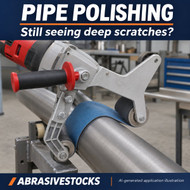
The HIJOHNY wide-belt pipe polisher shown in the application illustration uses 100 × 760 mm belts. Check the matching 100 × 760 mm replacement belts for the material, available grade and displayed quantity before ordering. A wider contact area does not remove the need for a suitable finishing sequence. Other HIJOHNY heads use different belt dimensions.
Prove the next step on a suitable sample
Before reworking a visible handrail or finished component, use a suitable offcut with a comparable starting surface. Keep a brief record of the belt material, grade and machine setting used within the operating instructions. Inspect the sample after each stage and change one part of the process at a time.
The aim is to confirm that the previous marks are being refined before moving on. Do not keep removing material from a local area just to chase a deep defect. Where wall thickness, shape or a specified finish matters, confirm the acceptable repair with the person responsible for the component.
Choose the next consumable with the starting surface in mind
Our guide to coated abrasive and non-woven pipe-polishing belts explains how cutting and conditioning fit into the process. A conditioning or polishing step should not be treated as a promise to remove a deep scratch.
Not sure where your process is stalling? Contact Abrasivestocks with your HIJOHNY model, belt size, material and grades tried, plus clear photos of the starting surface and the finish you want to match. Those details help us discuss an appropriate next step without guessing from a grit number alone.


